
Choosing the Right Smoker: Charcoal, Pellet, Electric, and Gas
Picking a smoker starts with how much hands-on time you want to spend, the flavor profile you prefer, and the meats you cook most often. Whether you are planning long weekend cooks or quick weeknight meals, each fuel type brings clear trade-offs.
The 4 Main Types of Smokers
Charcoal Smokers
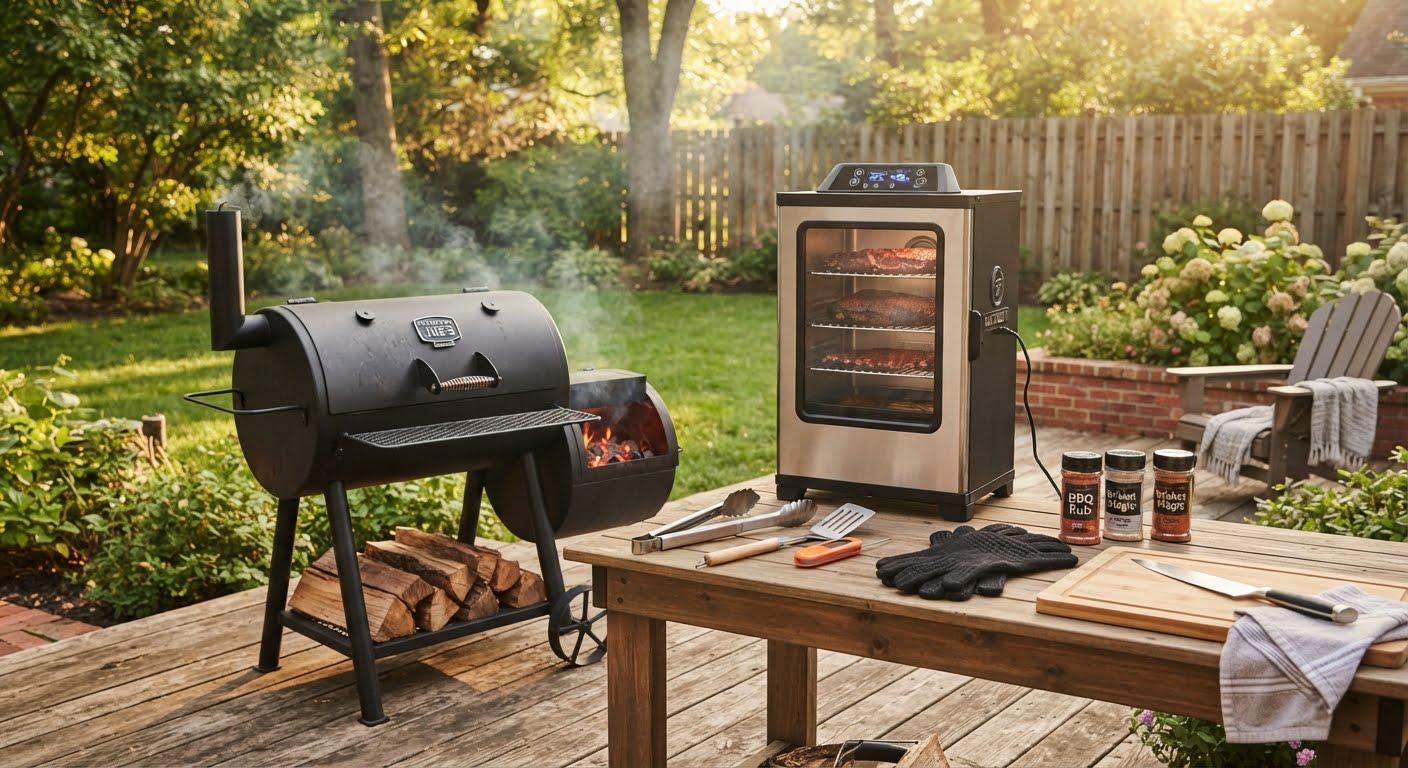
Charcoal smokers use lump charcoal or briquettes—often paired with wood chunks—to generate heat and smoke. You control temperature by adjusting air vents and dampers.
- Pros: Strong, classic smoky flavor, high heat capability, and lower upfront costs on basic models.
- Cons: Requires active fire management, more time to heat up, and ash cleanup.
Pellet Smokers
Pellet smokers burn compressed wood pellets fed by an auger into a firepot. Digital controllers regulate temperature automatically and often include app monitoring.
- Pros: Consistent temperatures, minimal babysitting, and versatility for smoking, baking, and grilling.
- Cons: Higher initial cost, requires an electrical outlet, and produces a milder smoke flavor than charcoal or stick burners.
Electric Smokers
Electric smokers use an internal heating element to warm the cabinet and smolder wood chips or biscuits. Most offer simple digital temperature dials or timers.
- Pros: Easy “set-it-and-forget-it” operation, steady heat in cool weather, and convenient for smaller spaces or rules restricting open flames.
- Cons: Needs power access, gives a lighter smoke flavor, and rarely develops a deep bark or high-heat sear.
Gas Smokers
Gas smokers run on propane or natural gas burners with a pan or tray for wood chips or chunks to produce smoke.
- Pros: Fast heat-up, straightforward flame adjustment, no reliance on electricity, and easy cleanup without charcoal ash.
- Cons: Less authentic wood-fire character than charcoal and can struggle with ultra-low temperatures on hot days.
How to Choose Based on the Meat You Cook
- Brisket and Pork Shoulder: Long cooks (often 8–14+ hours) benefit from steady heat and rich smoke. Pellet smokers make overnight or all-day cooks manageable with automated control, while charcoal (such as vertical bullet or offset designs) delivers bold bark and deep smoke flavor when you can tend the fire.
- Ribs: Pork or beef ribs cook faster than full briskets and respond well to charcoal or pellet smokers for balanced smoke and bark without drying out.
- Poultry (Chicken and Turkey): Poultry cooks relatively quickly and absorbs smoke easily. Electric and gas smokers handle chicken and turkey reliably with steady temperatures, while pellet or charcoal units work well if you want crisper skin and stronger smoke.
- Sausages, Fish, and Quick Cuts: Delicate meats like fish or sausages can get overwhelmed by heavy smoke. Electric and gas smokers offer gentle, controllable heat and lighter smoke profiles.
Top Smoker Brands to Consider
Based on Food & Wine testing and buying guides from BBQ Champs Academy and Grill Masters Club, these brands stand out across fuel types:
- Traeger Woodridge Pro (Pellet): Highlighted by Food & Wine for consistent heat and straightforward pellet smoking.
- Masterbuilt 40-Inch Digital Electric Smoker (Electric): Featured by Food & Wine for accessible electric smoking with a compact wood chip tray, while Masterbuilt is widely known for budget-friendly electric and charcoal options.
- Pit Boss PBV3G1 3-Series Gas Vertical Smoker (Gas): Noted by Food & Wine as a multi-rack vertical gas smoker option.
- Weber Smokey Mountain (Charcoal): Frequently cited by BBQ Champs Academy and Grill Masters Club as a reliable vertical charcoal smoker with a water pan for temperature stability.